Pendle RWA Insights — Grayscale
10 questions with Sebastian Pulido, Managing Director and Head of Onchain Asset Management at Grayscale, on the future of tokenized assets

Tokenized RWAs reached $39.3B onchain this month, up more than 80% since January, with issuers like BlackRock and Apollo already bringing funds and credit onchain.
The question now is what can holders actually do with these assets once they arrive?
For the latest Pendle RWA Insights, we posed 10 questions to Sebastian Pulido, Managing Director and Head of Onchain Asset Management at Grayscale
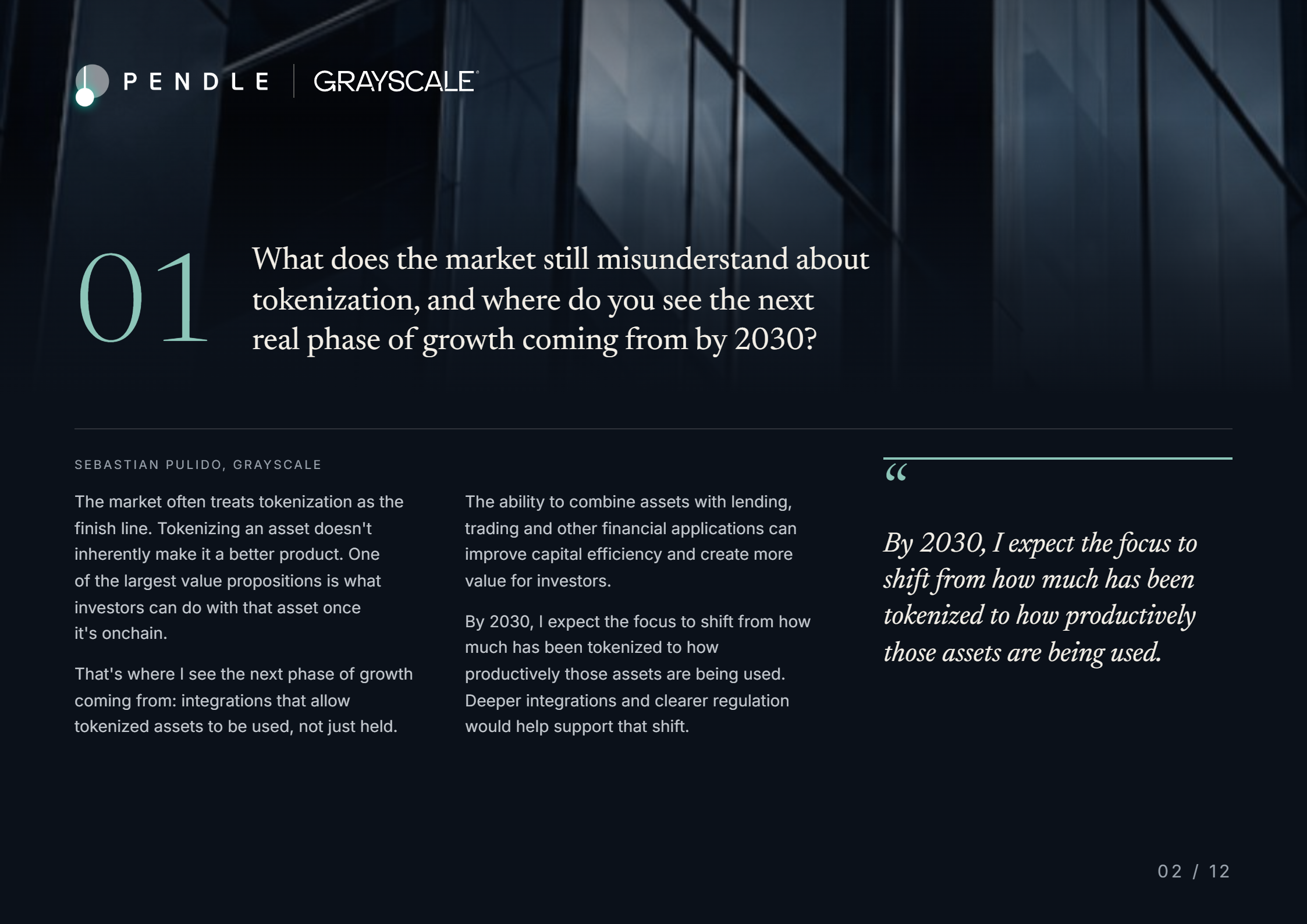
Pulido says the market often treats tokenization as the finish line, when tokenizing an asset doesn’t make it a better product on its own.
By 2030 he expects the focus to move from how much has been tokenized to how productively those assets are being used.
Most tokenization so far has served institutional treasury, collateral and settlement.
Pulido sees infrastructure as the foundation and distribution as a big part of the value for an issuer, though a wider investor base matters when wallet and exchange access brings in new demand.

The GENIUS Act bars payment stablecoin issuers from paying yield to holders, while holders of tokenized money market funds still earn it.
Pulido expects the two to coexist and draw closer, with stablecoin issuers able to hold eligible tokenized MMFs in reserve and users switching between them as they need cash.

Tokenized MMFs are already accepted as margin at several exchanges.
Pulido says issuing the token is only the first step, and that fund shares become standard collateral once institutions can rely on the pricing, the liquidity and the process for transferring and redeeming them.

Most onchain yield still floats. Pulido sees an onchain yield curve as a sign of a more developed market, and expects term markets to form around individual assets first, since credit and liquidity risk differ across protocols.
Those are the markets Pendle is already building.

Treasuries came first, but Pulido doesn’t expect every asset class to follow the same path.
The strongest candidates have clear legal rights and reliable valuation, and he notes that putting an illiquid asset onchain does not make it liquid, especially in lending markets.

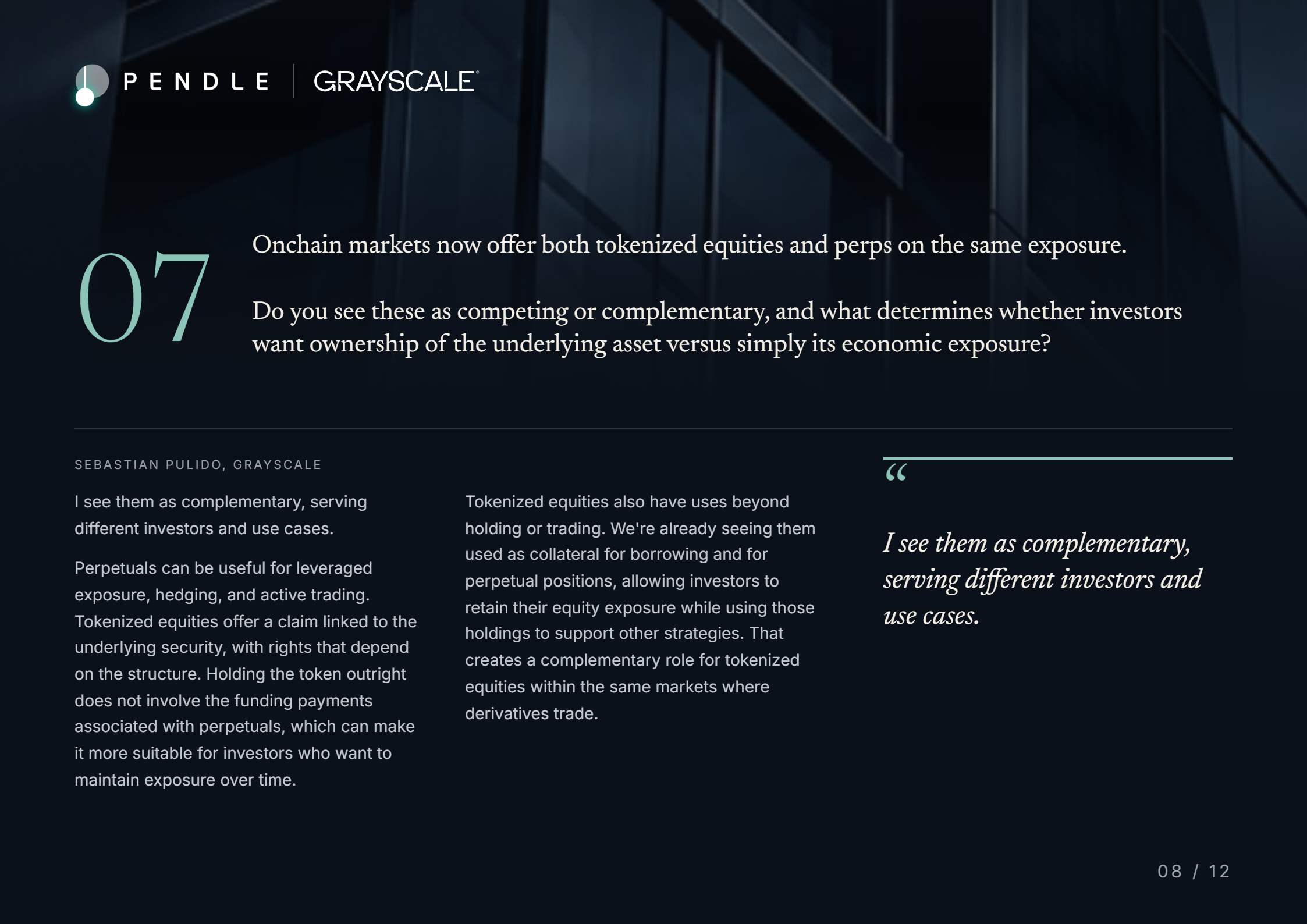
With tokenized equities and perps offering the same exposure onchain, Pulido sees them as complementary.
Holding the token avoids funding payments, which suits longer-term holders, and tokenized equities are already posted as collateral for loans and perp positions.
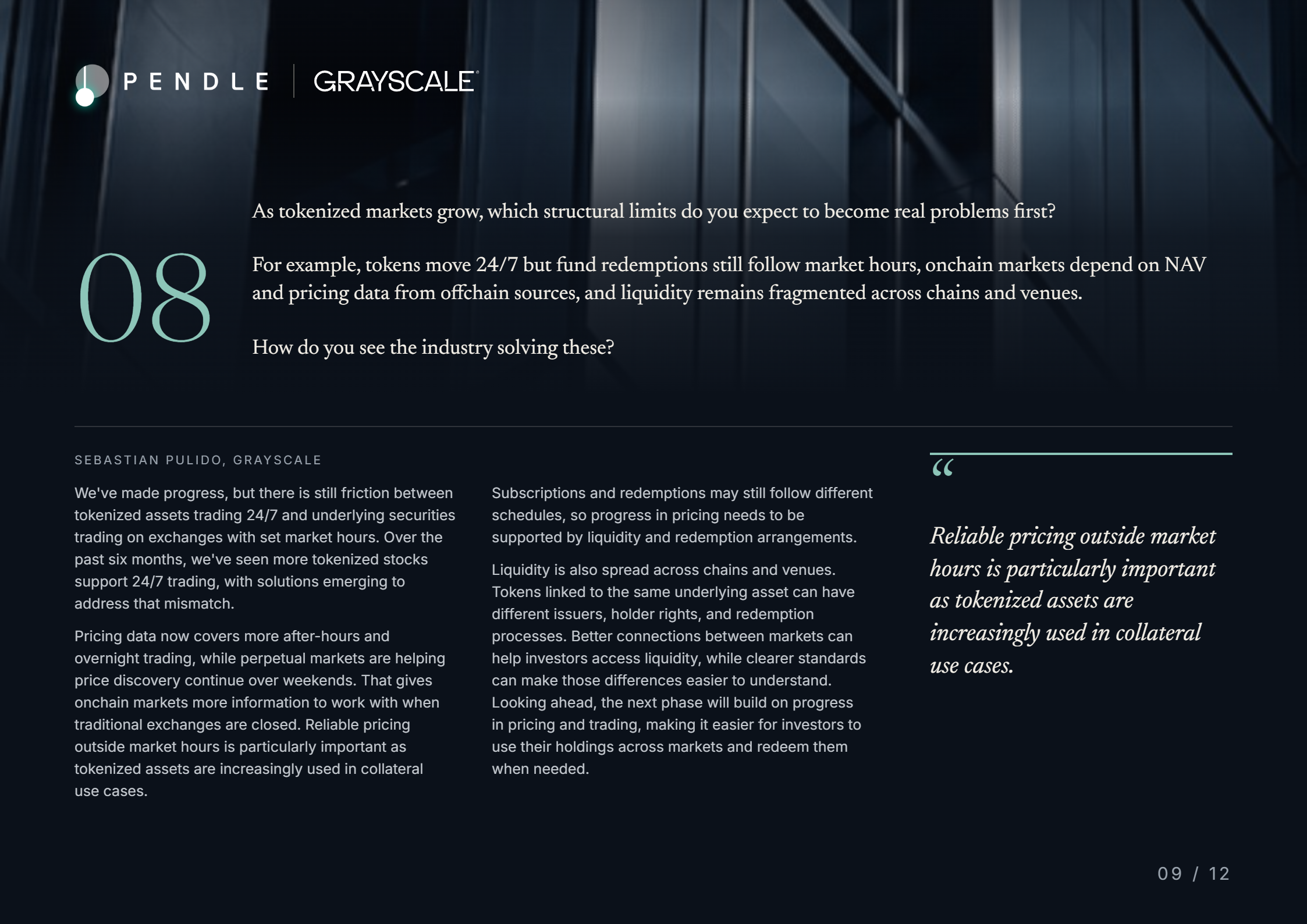
On structural limits, Pulido points to tokens trading 24/7 against underlying markets with set hours.
After-hours pricing and weekend price discovery on perps have narrowed that gap, but redemptions can still run on their own schedules and liquidity is split across chains and venues.
Institutions are comfortable holding tokenized funds but far less so using them inside DeFi.
Pulido expects that to come with experience, as institutions learn how protocols work and how assets move through them, and as early participants share what they learn with the rest.

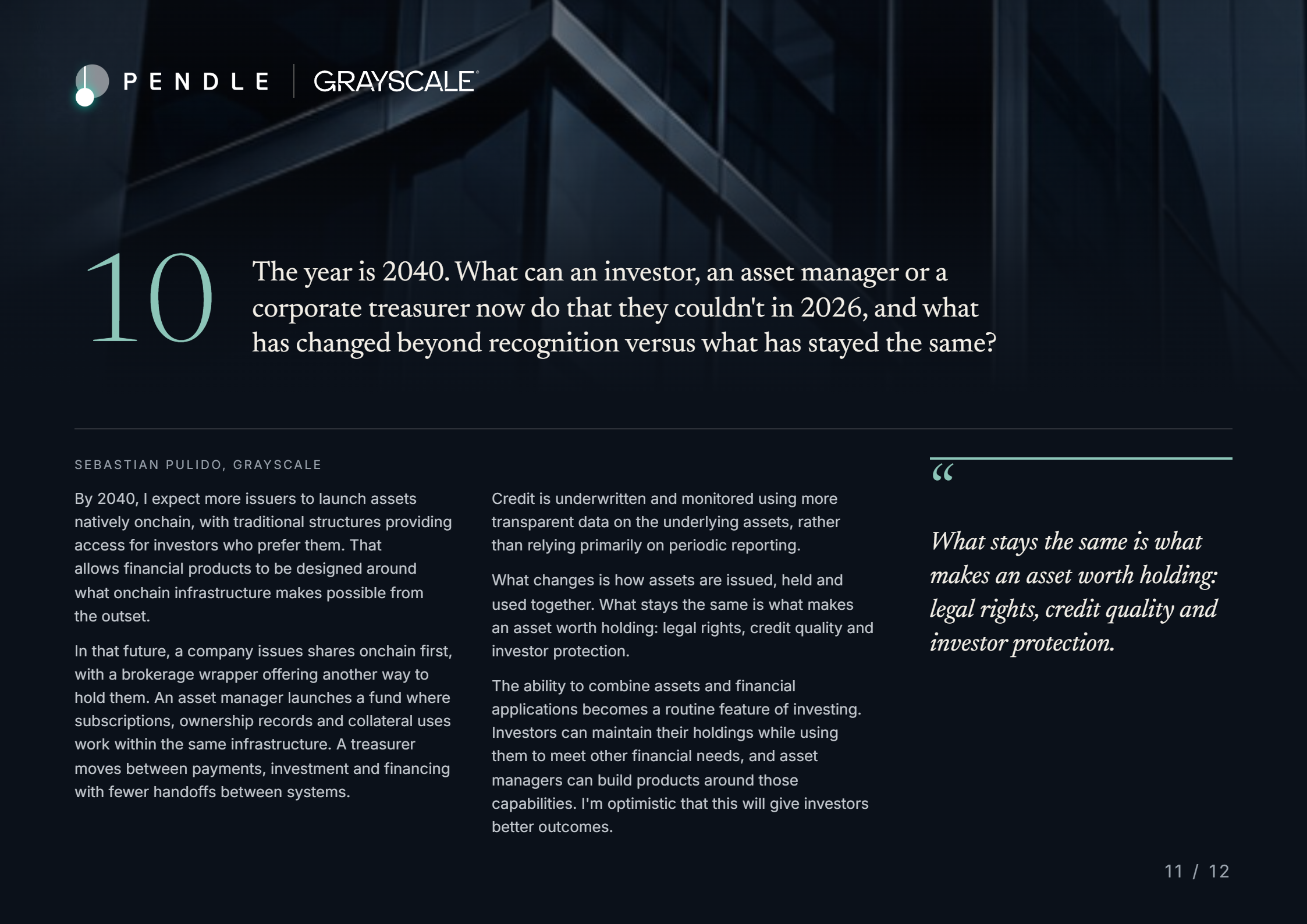
By 2040, Pulido expects more assets to be issued natively onchain, with brokerage wrappers as another way to hold them, and credit monitored on more transparent data than periodic reports.
What makes an asset worth holding stays the same, in his view legal rights, credit quality and investor protection.
A big thank you to Sebastian for taking the time to share his thinking with us, and to the Grayscale team for helping put this together.
All 10 answers from the interview and the full PDF are also on LinkedIn.
